Acrylic Nails at Home: 7 Powerful Steps for a Professional Finish

The allure of a beautiful, durable, and customized nail enhancement has made Acrylic Nails at Home nails a perennial favorite in the beauty world. However, the high cost of salon visits and the time commitment can be a significant barrier, leading many to search for a reliable method on how to do Acrylic Nails at Home.
The fear of improper application technique resulting in lifting, damage, or an unnatural, bulky look often stops individuals from successfully achieving the desired long-lasting wear and professional finish.
The fix for this challenge is not simply buying an Acrylic Nails at Home nail kit, but mastering the proper ratio of materials, understanding the critical nail prep steps, and adhering strictly to essential safety guidelines. This definitive guide, written by an expert with decades of experience, walks you through the entire process, ensuring your DIY Acrylic Nails at Homes are strong, beautiful, and safely applied from start to finish.
The Essential Acrylic Nails at Home Nail Kit and Nail Prep for DIY Acrylic Nails at Homes
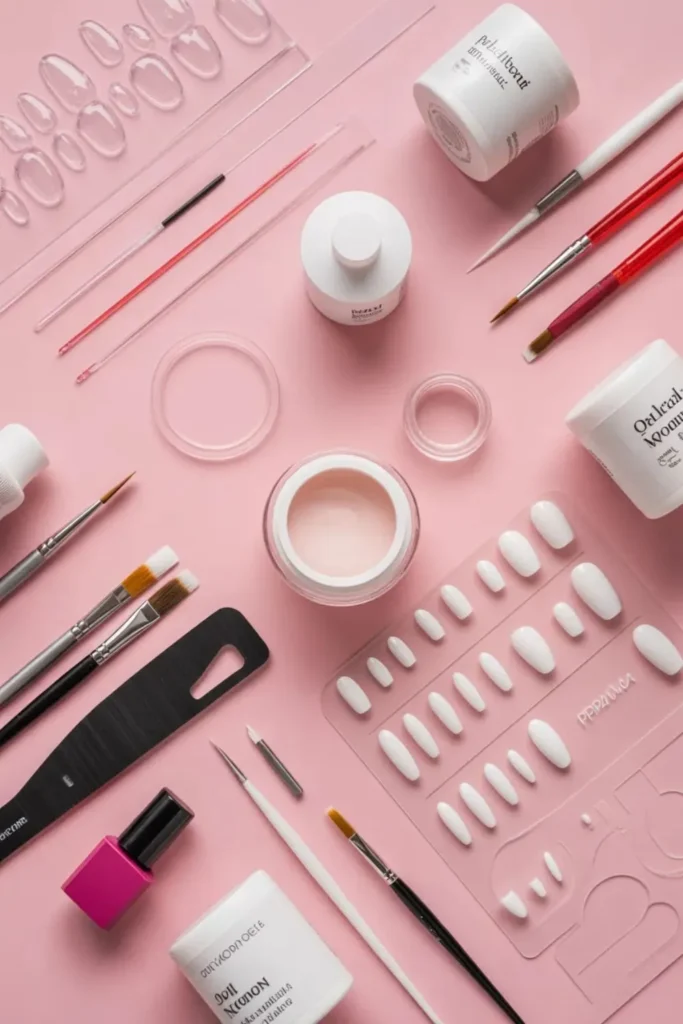
A successful Acrylic Nails at Home application begins long before the first bead of product is placed. It relies on having the right high-quality products and a perfectly prepared nail plate. Cutting corners on either of these steps is the single biggest mistake that leads to lifting, breakage, and compromised nail health. Mastering this foundation is crucial for learning how to do Acrylic Nails at Home with a truly professional finish.
See More About : Nail Inspiration Square: 15 Powerful Shape Wins & Avoids
Why Ventilation and Safety Guidelines are Non-Negotiable
Acrylic Nails at Home products, particularly the monomer (liquid), contain strong ingredients that release fumes. Therefore, proper ventilation is the single most important safety guideline for DIY Acrylic Nails at Homes. Always work in a well-ventilated area near an open window or with a dedicated air purifier. Wear safety glasses to protect your eyes from filings and polymer powder. Additionally, use high-quality products from reputable sources, as cheap, untested monomer liquids can contain MMA (Methyl Methacrylate), a harsh chemical banned in many areas for its difficulty in safe removal and potential for causing damage to the natural nail.
Mastering the Nail Prep for Nail Enhancement Longevity
The natural nail must be completely dehydrated and lightly etched to create a surface the Acrylic Nails at Home can bond to.
- Shaping and Cleaning: File your natural nail to the desired nail shape (e.g., square, coffin). Gently push back the skin from the cuticle area never cut it as the Acrylic Nails at Home must not touch the skin.
- Etching the Surface: Use a fine sanding bands or buffer block to gently remove the shine from the entire nail plate. This step creates a porous surface for adhesion but must be done lightly to avoid damage.
- Dehydration and Primer: Cleanse the nail with a nail dehydrator to remove all oils. Next, apply a specialized primer (acid-free is recommended for beginners). The primer creates a sticky, secure anchor for the nail enhancement material, which is critical for long-lasting wear.
Understanding the Chemistry: Monomer and Polymer Powder Proper Ratio
What is the single most challenging aspect of learning how to do Acrylic Nails at Home? It is mastering the proper ratio of monomer (the liquid) and polymer powder (the powder). The right balance creates a perfect “bead” that allows for smooth application, self-levels beautifully, and cures to the desired hardness and strength. The proper ratio ensures your Acrylic Nails at Home structure is strong and flexible, not brittle or gummy.
The Importance of a Quality Acrylic Nails at Home Brush and Dipping Method
Your Acrylic Nails at Home brush is your most crucial tool. It should be high-quality, made of natural Kolinsky hair, and ideally a size #8 or #10.
- Cleaning the Brush: Before first use, gently fan out the bristles and clear out any sizing (stiffness) by dipping it into your monomer.
- The Dipping Method: Dip the tip of your brush into the monomer, then gently wipe one side on the side of the container (this is key to control the liquid). Then, slide the tip of the wet brush lightly into the polymer powder at a 45-degree angle. Hold it there for a second. The resulting bead should form naturally on the tip of the brush.
Troubleshooting the Application Technique: Wet vs. Dry Beads
The goal is to pick up a medium consistency bead (often called the “perfect bead”).
- Wet Bead (Too much monomer): This bead is shiny, runny, and won’t hold its structure. It will flood the cuticle area and increase the risk of lifting. Correct by wiping more monomer off the brush before dipping into the polymer powder.
- Dry Bead (Too much powder): This bead is crumbly, opaque, and difficult to sculpt. It results in a thick, lumpy look with poor adhesion. Correct by leaving more monomer on the brush before dipping into the polymer powder.
- Perfect Bead: This bead is slightly glossy, smooth, and holds its round shape on the brush tip for a few seconds before slowly starting to self-level. This is the precision needed for flawless application.
Step-by-Step Application Technique: How to Do Acrylic Nails at Home Precision
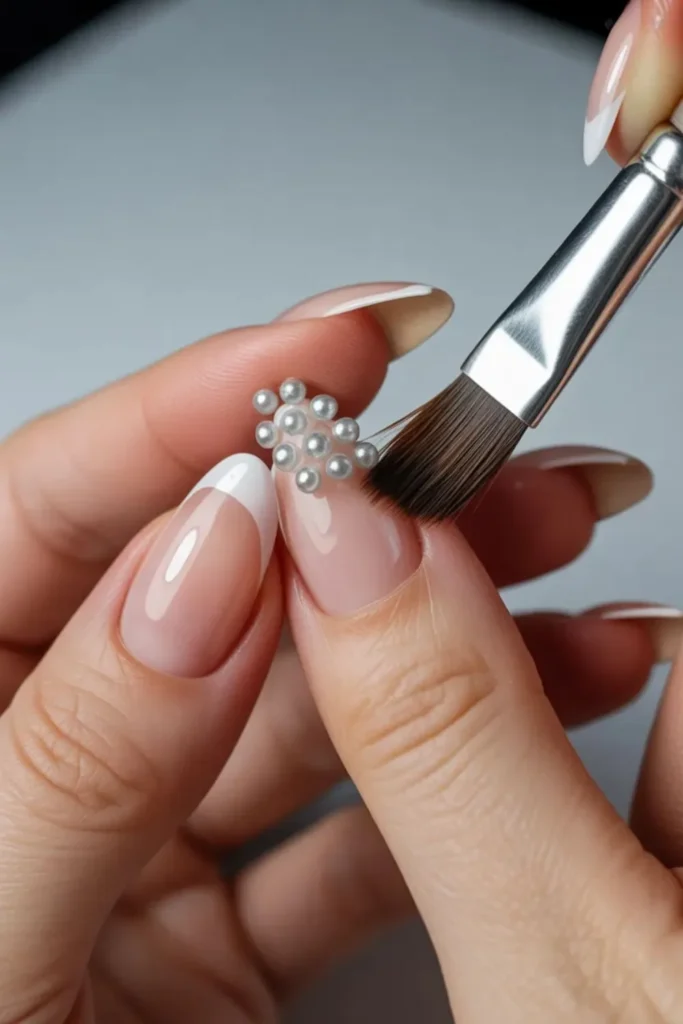
The key to a long-lasting, natural-looking set of DIY Acrylic Nails at Homes is the three-bead method. This method ensures the correct distribution of product, building the necessary structure and apex (the highest, strongest point of the nail) to resist stress and impact.
Sculpting the Apex and Structure for Long-Lasting Wear
- Bead One (Free Edge/Extension): Place the largest bead (the extension bead) on the natural nail’s free edge or tip extension. Use the body of the Acrylic Nails at Home brush to gently pat and pull the product to form the length and general shape.
- Bead Two (Stress Area/Apex): This is the most crucial bead. Place it just above the stress point of the natural nail (roughly the center). Gently pat the product down and then float it toward the tip. This second bead builds the apex, providing the strength and thickness needed for long-lasting wear. Taper this layer thinly toward the edges.
- Bead Three (Cuticle Area): This is the smallest, wettest bead. Place it 1-2 millimeters away from the cuticle area. Gently guide and pat it toward the cuticle without touching the skin. Feather the product down toward the second bead. This bead smooths the transition for a professional finish. The entire application should be thicker at the apex and taper thinly toward the cuticle and free edge.
See More About : Coffee Chrome Nails: 5 Luxe Tips for a Rich Mocha Shine
The Filing Technique for a Professional Finish
Once the Acrylic Nails at Home has fully cured (hardened, with a minimal cure time of 3-5 minutes, though full hardness takes longer), the filing technique begins. This step is where you perfect the shape and achieve the smooth, professional finish.
- Rough Shaping: Use a coarse file (100 or 150 grit) to quickly refine the sides and free edge of the nail enhancement.
- Surface Smoothing: Use a medium-grit file (180 grit) or an electric file with sanding bands to file the surface. Focus on smoothing the apex and ensuring the product near the cuticle area is seamlessly blended with the natural nail.
- Finishing: Use a fine-grit buffer block to remove all file marks. Finish with a high-shine topcoat (gel top coat is recommended, requiring a quick cure) to seal the surface and protect the structure.
Maintenance and Fills: Extending the Life of Your DIY Acrylic Nails at Homes
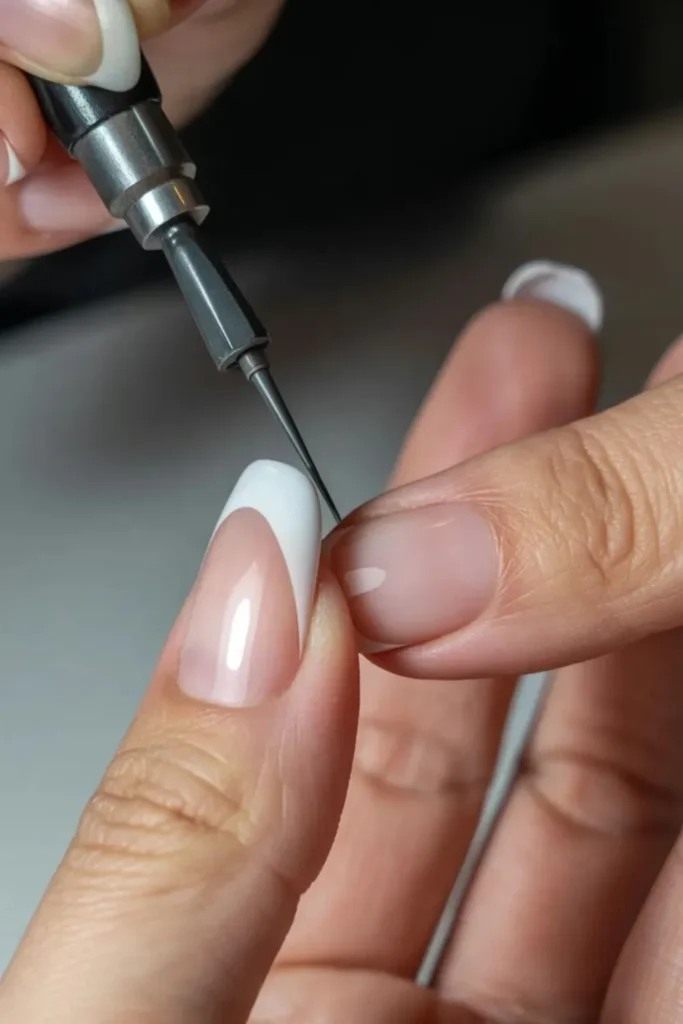
Even perfectly applied DIY Acrylic Nails at Homes will eventually grow out, leaving a noticeable gap between the cuticle area and the Acrylic Nails at Home product. Proper maintenance in the form of a fill is essential for both aesthetic appeal and preserving nail health. Ignoring the need for a fill can lead to major structural issues and lifting.
When to Schedule a Fill and How to Safely Rebalance the Structure
A fill should typically be performed every 2–3 weeks, depending on your natural nail growth rate.
- Preparation: File down the top surface of the old Acrylic Nails at Home, especially near the gap, and gently feather the edge to make a smooth transition. Remove any lifted product completely to prevent moisture from getting trapped underneath, which is a major source of damage and infection.
- Application: Treat the newly exposed nail plate area with primer. Apply a medium bead of new Acrylic Nails at Home only to the regrowth area, smoothing it over the old product.
- Rebalance: A fill is also the time to rebalance the structure. As the nail grows out, the apex shifts toward the tip, making the nail unbalanced and prone to snapping. Filing the old apex down slightly and rebuilding the structure in the correct new location is vital for long-lasting wear.
See More About : Metallic Chrome Nails: 7 Power Tips for a Flawless Mirror Finish
Daily Nail Care to Prevent Lifting at the Cuticle Area
The key to long long-lasting wear is daily protection and hydration. Apply cuticle oil two to three times a day. This keeps the surrounding skin soft and flexible, which in turn helps prevent the Acrylic Nails at Home from pulling away and lifting at the cuticle area. Avoid using your nails as tools (a common cause of stress and snapping at the apex) and wear gloves when cleaning or doing dishes.
Safe Removal: Protecting Nail Health from Damage
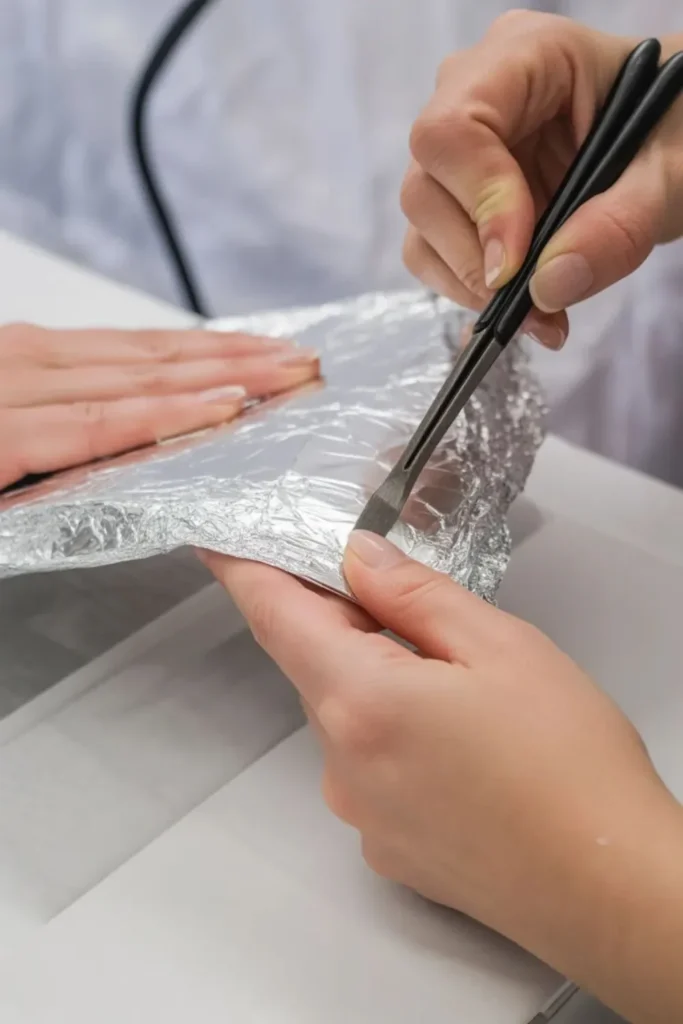
One of the most intimidating parts of learning how to do Acrylic Nails at Home is the removal process, yet it is the single most important factor for protecting nail health. Forcibly prying or peeling off DIY Acrylic Nails at Homes will strip layers of your natural nail plate, resulting in significant damage, thinning, and long recovery times. Only a controlled soak-off removal is acceptable.
The Acetone Soak Method for Safe Removal
- File Down the Bulk: Use a coarse file (100 grit) to remove as much of the structure and bulk of the Acrylic Nails at Home as possible, leaving only a thin layer over the natural nail plate. Do not file down to the natural nail.
- The Soak: Saturate cotton balls in 100% acetone soak and place them directly on the nail. Wrap each fingertip tightly in aluminum foil to trap heat and accelerate the cure time of the dissolving product.
- Removal: After 15–20 minutes, the Acrylic Nails at Home will be gummy and softened. Gently scrape the residue off with a wooden cuticle pusher. If it doesn’t come off easily, soak for another 5–10 minutes. Never pry.
Post-Removal Nail Health Repair and Maintenance
After the acetone soak, your natural nails will be dehydrated and weak. The post-removal nail care is essential for repair. Immediately wash your hands and generously apply cuticle oil to rehydrate the skin and nail. Use a ridge-filling base coat for a few weeks, avoiding new nail enhancement application until the nail plate has recovered its natural strength and flexibility.
See More About : Short Nails Ideas Simple: 25 Effortless & Chic Minimalist Designs You’ll Love
Frequently Asked Questions
What is the best way to prevent my DIY Acrylic Nails at Homes from lifting near the cuticle area shortly after application?
To prevent lifting, the most critical step is flawless nail prep, ensuring the nail plate is thoroughly dehydrated and that the primer is applied correctly, while strictly avoiding touching the skin in the cuticle area with the Acrylic Nails at Home product during the application technique.
How can I make sure I am using the proper ratio of monomer to polymer powder to avoid a brittle structure?
The most reliable method for achieving the proper ratio is to observe the bead; it should be slightly glossy, hold its shape for a few seconds before settling, and be firm enough to sculpt without being crumbly, if it is too dry, it will create a brittle structure prone to damage.
Is it safe to use an electric file with sanding bands for filing and maintenance when I do Acrylic Nails at Home?
Yes, an electric file with fine sanding bands can provide a faster, smoother professional finish during the filing technique for DIY Acrylic Nails at Homes, but it requires a very gentle hand and a low speed to avoid friction burns or thinning the natural nail plate and causing damage.
Conclusion
The journey of learning how to do Acrylic Nails at Home is a rewarding blend of artistic flair and technical precision. By adhering to strict safety guidelines, investing in a quality Acrylic Nails at Home nail kit, and diligently practicing the application technique and proper ratio, you can consistently achieve the salon-level professional finish and long-lasting wear you desire.
Remember, the difference between a successful set of DIY Acrylic Nails at Homes and a damaged nail is solely in the care and respect you give to the process from the initial nail prep to the final safe removal. Commit to these expert steps, and you will unlock a world of bespoke nail enhancement possibilities.